Whirls of Pontar | Plot summary
Jakub Krassowski
Jan 18, 2026
For the Isles of Pontar, the fair turned out to be not so much a celebration of trade as a moment when the entire town stood on the brink of a new era. When the first wave of merchants, refugees, artists, and diplomats swept through Tassels-Flochburg, no one knew that it would be the last such fair before the war...
A large part of life revolved around money and alcohol. The Moonshiners came out of the shadows, legalized their spirits, bought back the Brewer's House, and got involved in serious business with the Merchant Guild, the Matrons, and even the Ofirians. At that time, the Guild was consolidating its dominance: a dice tournament, deals with the Eternal Flame, and the defeat of the Tanners meant that it was the merchants who really began to “rule the roost.” The Griffin Inn grew into an elegant center of social and political life, secured by property deeds and a monopoly on moonshine, while Under the Skillet became the nighttime heart of the underworld - with staged fights, illegal liquor, and gambling.
At the same time, a silent war for the souls of the inhabitants was raging. The Preachers of Eternal Flame paid a high price for their crusade—lost relics, maimed brothers, schism, and the need for a new doctrine—but they left behind fear, respect, and the knowledge that they were ready to face even Gaunter O'Dim. Sanctuary of Melitele responded with a different strategy: cooperation instead of war. The priestesses made a deal with the Shamans and Herbalists, jointly overame the “blue sickness,” cleaned up the swamps with the help of the Gravediggers, and acquired a medic from Oxenfurt, becoming a stable pillar of care and spiritual order. The Charlatans and Herbalists, in turn, dealt with Johann's madness, maintained their position as independent healers, and entered into a complex network of relationships with the Priestesses, Gravediggers, and Scoia'tael.
In the swamps, the graveyard, and the waterfront, a less spectacular but crucial battle for everyday safety was taking place. The Gravediggers cleaned the cemetery of the northerners, secured the walls against the corpse eaters, cooperated with both religions, and... became better acquainted with The Mirror Merchant. The Dockers appeased the Water Lords, resumed crossings, and, thanks to their barges, became not only the backbone of trade, but also a potential lifeline for escapes and contraband, closely intertwined with the shady dealings of Stynka's Crew. For the Nonhumans, the same swamps were primarily a large, neglected cemetery - a place where their fallen kin rested in the mud... There was no revenge, no compensation, not even a word of admission of guilt - and even if there had been, it would not have been enough... There are wrongs that cannot be repaid with apologies, only with action or nothing at all. In such a situation, the words of the Scoia'tael recruiters, acting on behalf of Nilfgaard and promising weapons and revenge, may not have sounded like foreign propaganda at all – but then, who knows what really germinates in the minds of nonhumans.
In the background, big politics was becoming increasingly apparent. Step by step, the Newcomers built up a dense network of contacts - from the Beggars' Camraderie, through taverns, to exotic merchants from Ofir. Conversations, letters, and discreet arrangements began to form into something bigger than ordinary market trade. Reports and news spread throughout the world, and what will come of them will certainly reach far beyond Tassels and the banks of the Pontar. The Delegation from Toussaint, which patiently collected names and declarations with wine and smiles, gained real support for its cause among merchants, beggars, nonhumans, and Stynka's Crew. Syanna, wherever she may be now, can be pleased with this turn of events. The Caravan of Ofir has set up its own trading post and embassy, secured a duty-free zone, and put down roots in its new home. All this was calmly overseen by the Widows and Matrons, a group of experienced townswomen who, instead of swords, had at their disposal land registers, a shelter, and wisely chosen alliances and marriages. Step by step, they made sure that Tassels had a roof over the heads of the weakest, a steady source of income, and at least a little stability for times that were clearly going to get tougher. In official accounts, they were considered mere “charity ladies,” but anyone with a head on their shoulders quickly realized that it was better to have them on their side of the table than across from them.
The Guard, Customs Officers, and Tax Collectors tried in their own way to maintain state order, while the Veterans tried to slip out of its provisions. The offic managed to establish the Military Draft Commission, maintain relative order, and bring criminals to justice, and the tax records were mostly accurate. Although no Nilfgaardian spies were found, and some names did not make it into the tax registers, the treasury was not empty after all. The Veterans, on the other hand, paid off their debts, took care of the crossing over the Pontar, and headed north, disappearing from the sight of those who could still remember their former names.
On the other end of the social ladder, the Beggars' Camraderie built their own empire, based on the Beggars' Penny, debts of gratitude, and information sold to the highest bidder. The Refugees blended into the background, clinging to work and relationships just to survive another day. The Vagabond Students ended its crazy experiments with the revival of the Creature and the death of their comrade, paid off its debts, avoided conscription, and dispersed in four directions, to meet again in the future, not in lectures, but perhaps... on opposite sides of the front. The Artistic Troupe paid off its debts with a well-sold performance, gained an Ofirian promise of safe passage, a safe place in their camp, and material for a new ballad about the North Star, which is still awaiting its grand premiere. However, when it came to fleeing from the approaching enemy, the artists remained on this side of the Pontar, with a trunk of props, a few coins in their purse, and the realization that this time they would have to seek refuge elsewhere than on the water.
And then a handful of soldiers under a tattered Temarian banner rushed into the Tassels market. Ves - covered in mud, with the grim expression of someone who has seen too much - stood on the cart and called on the people to take up arms. The stories of war, which until then had sounded like news from distant lands, suddenly had names, faces, and bloodstained bandages. On that day, it became clear that Pontar was no longer a safe border, but a front line.
What came next was the stark consequence of impending defeat. First, defeated Temarian troops swept through the area—fugitives, deserters, and wounded soldiers pulled on makeshift carts. Later, like a shadow behind them, compact ranks in black tabards arrived. The battle took place so close that the ground rumbled in Tassels, and fires lit up the sky on the horizon. When the din of battle subsided, it was all over: Nilfgaard had won and the Temerian side of the city had been captured.
What next for the town?
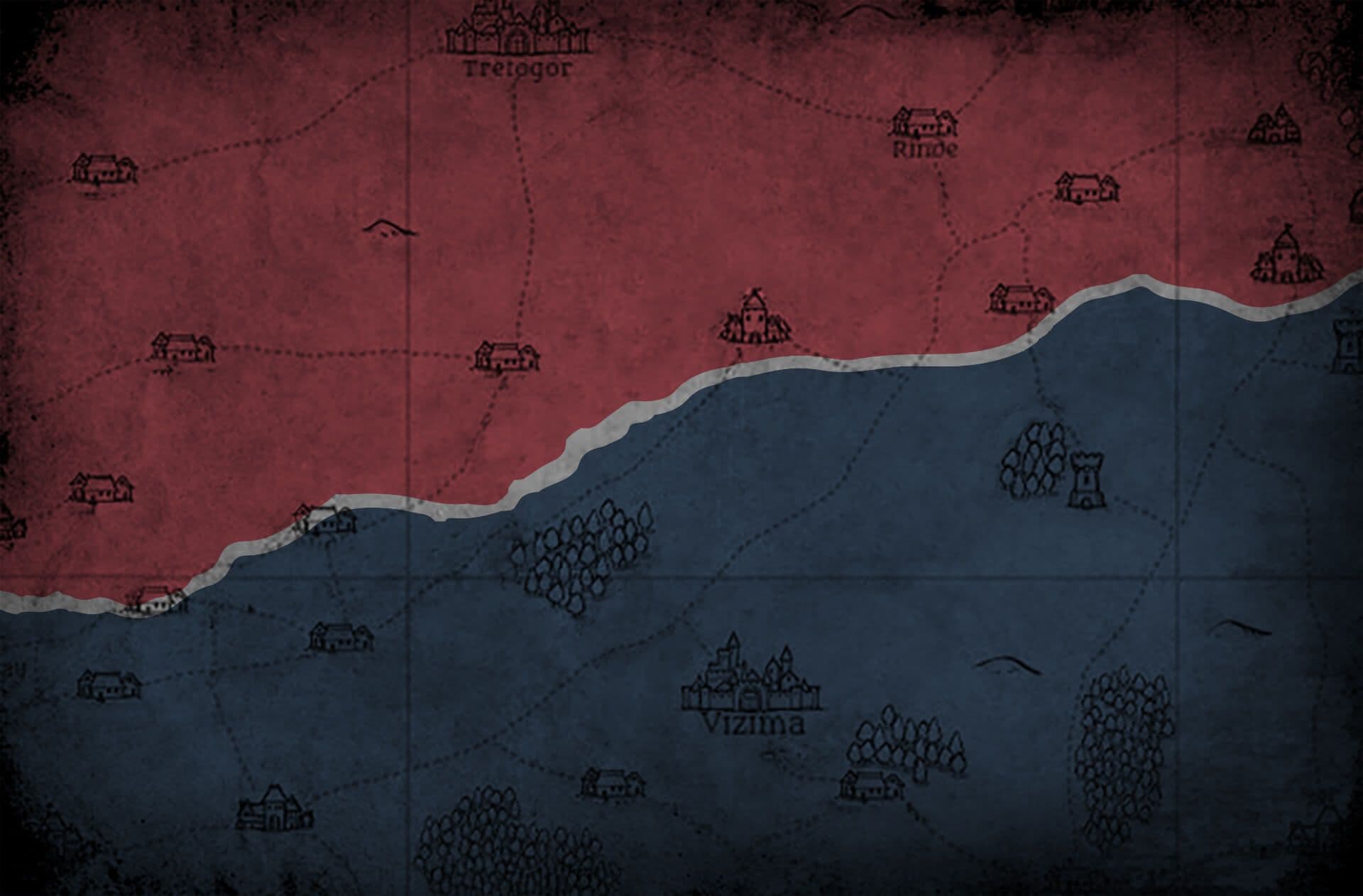
Flochburg ceased to exist by name - in its place appeared Caudavaro, with a Nilfgaardian garrison, its own administration, and a faith imposed from above. The Black Ones did not burn the Isles - they considered it too important a strategic point. Instead, they took over the bridges, warehouses, and tax records, and the population... was relocated. The inhabitants of the Temeria side were resettled ‘for the sake of keeping order’ to a nearby border town. The Redanians, on the other hand, were offered a proposal of the kind that cannot be refused: “it is better to leave on your own before the army does it for you.” So the people of Tassels moved to the same area that their former neighbors had settled in, only on their side of the border. After all, they had lived side by side for years, conducted business together, and argued over the same grain prices. It was easier to move their entire lives a few miles away than to start from scratch. The Dockers felt this most painfully – they had to abandon their beloved Pontar, their boats, and the waterfront. They took with them everything they could carry, including the statue of Vodyanoi, as if they hoped the idol would support them in difficult times.
War ceased to be a story and became everyday life. Hunger, poverty, and armies that always take what they want—regardless of whether they have Temeria lilies or Nilfgaard suns on their shields—forced the inhabitants to make decisions that no one would ever want to make. Some chose from the heart: they sold their last sack of flour to feed other people's children, hid fugitives, risked their lives for their loved ones. Others saw it as an opportunity - for profit, revenge, building their own position on someone else's misfortune.
The true song of war had only just begun to flow down the Pontar River – on barges and rafts that carried the bodies of soldiers instead of goods, as well as in carts and columns of people displaced from the Isles and the surrounding villages. The refugees were followed by increasingly emaciated horses, and the granaries in the old houses by the river were emptying, while the new ones on the other side of the border were filling up too slowly for the number of new mouths to feed. Along with hunger and poverty came the true harbingers of misfortune. First they appeared in the abandoned cellars of Caudavaro, then in the overcrowded barns and granaries where people had been moved, and finally they ran down the middle of the road even during the day. Rats...
Everyone knew that where they settle, peace quickly disappears, then health, and finally order. Then it turned out that all pacts, privileges, and deeds of ownership meant little in a world where it was no longer seals or coats of arms that determined who would survive the winter, but how many “uninvited guests” would visit the granary at night.
We are waiting for you!
Previous entries: